Big question among my search terms this morning: “Does meth look like a blue jolly rancher”?
 I would have no idea how to answer this question if it weren’t for Breaking Bad, a show so intense that I can watch only one episode at a time or my fur is affected. In Breaking Bad a chemistry teacher (Bryan Cranston) diagnosed with lung cancer decides to manufacture methamphetamine to make some quick, substantial cash so his family will be taken care of when he kicks the bucket.
 You might decide to watch Breaking Bad because you’re a fan of Malcolm in the Middle, in which Cranston plays a bumbling, lovable dad and husband. You might decide to sit the whole family down to watch Breaking Bad because you liked that character so much. But OMG, don’t, unless you want your kiddies to see drug pushers liquefied by bathtubs full of acid or—perhaps worse—Cranston running through the desert in his tighty-whities.
 I adore Breaking Bad. It is well-thought-out, well-paced, well-written and—the key thing—suspenseful without resorting to cheap teases or obvious foreshadowing. It is nuanced, cadenced, intelligent, rife with subtle social commentary, and completely absorbing.
So I have decided to start watching it sober.
This is a big step—a step you could almost call a slippery slope. If I could find six other television shows I liked as much, I might stay sober every night to really understand the plotlines. This would change my life immeasurably, save the household money, and leave people like Julia Gale of Broker’s Gin without a bear to share alcohol-related pleasantries with.
Fortunately television is full of shit, so I’ll have finished Netflix’s trove of Breaking Bad episodes before I ever discover anything as good. Not only is it urging me toward a dry path; it’s convinced me to avoid crystal meth.
 Not that there’s any meth around here. My mum’s not a very precise cook, so I doubt she could make meth without blowing up the house, although it would be funny to watch her try (but not if she does it in her skivvies like Bryan Cranston). My dad’s better at measuring stuff but not so good at timing things, so he too would probably blow up the house (and I don’t want to see his ginch either). But I can tell you from watching Breaking Bad that meth does not look like Jolly Ranchers; it looks more like Herkimer crystals, and the kind Bryan Cranston makes in the show is indeed blue. With his chemistry knowledge he knows how to make an ultra-refined product that can out-compete the tainted cookery of meth-head street punks.
Much the way an exceptional vintner crafts wine that outcompetes the lesser viticultural market players.
Here at LBHQ we are firmly in the <$20 wine range (the competent street meth level, if you will). Our exposure to boutique wines is pretty limited, but occasionally we luck out. A few months ago my good friend Pixie gave us me a delightful chardonnay, and at Christmas my dad’s parents gave us me a bottle they bought on a Californian vineyard tour: BR COHN MENDOCINO COUNTY BARBERA (2009).
We knew before decanting this wine that it might be special. Nana and Papa (they don’t know I call them that) indicated they intended my parents me to enjoy it on a special occasion. They told us it came from a Sonoma County boutique winery owned by Bruce Cohn, manager of the Doobie Brothers, and that it had been well reviewed.
With philistines like my parents that sort of set-up can skew a wine tasting unfairly. Knowing a wine costs more money than their usual plonk or that it comes from a specialty winery skews their objectivity. This is why they need a bear to help them taste wine properly.
In the glass BR COHN MENDOCINO COUNTY BARBERA is a deep garnet color with generous legs. The aroma is lush, redolent of raspberries and cherries and almost imperceptible vanilla bean.
On the palate the wine delivers on these fruit-forward essences, dry and warming despite the ripe fruit profile. Medium- to full-bodied with low tannins and good balance, the wine concentrates the fruit to the front of the palate, finishing memorably with cedar and vanilla, but only moderate length.

BR Cohn Tasting Room
The wine is an unusual Californian offering made with 100% Barbera grapes and aged in oak for 18 months. Although it is recommended as a great pairing wine, I think food would distract from the experience of tasting it properly rather than enhance its characteristics.
This wine is an example of what a vintner can do with enough viticultural depth. And indeed Bruce Cohn grew up on a farm, learning about wine at a young age when he wasn’t milking goats and dreaming of musical fame. The MENDOCINO COUNTY BARBERA is no street-punk-quality table wine—it is crafted with experience and depth. Just the way Bryan Cranston makes crystal meth on Breaking Bad—he cares about making a sublime end product.
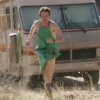 Not that crystal meth is sublime! You should really not ever do crystal meth, especially if you like having teeth, a job, and freedom from incarceration. But if you ever do decide to start cooking, you might want to be a chemistry teacher.
My mum thinks I’m overdoing it with the analogy, which essentially means she’s not going to take me to the UVIN to make our own wine—mainly because it would end up being the cheap-and-nasty street-punk budget version, and only I would tolerate drinking it. (Which was my plan.)
Finding good booze is a lot like finding a beloved television show. There are zillions of bottles on the liquor store shelves, most or even all of which I’d truthfully drink, but considerably fewer bottles that are special. BR COHN MENDOCINO COUNTY BARBERA (which isn’t even on my liquor store shelves) is definitely a special wine.






 Liquorstore Bear