FALERNIA CARMENERE RESERVA (2007)—Better than pain meds (I think)

My Fellow Inebriates,

The grandfather I never knew would have been 80 years old today, something I wouldn’t have learned without snooping in my mum’s e-mail box, where I found an attachment from his sister, my great aunt (who doesn’t know I call her that). The picture she sent dated back to 1943, when my grandfather was 11 in Blitz-torn London. In the event of an invasion by Hitler, the poster was to be distributed to the population.

Sorry, Fluffy, you need more than a vacant stare to keep a girlfriend like Dolly.

I’ve had grandparents on the brain lately, what with Fluffy Bear continuing to haunt our house, albeit with attenuated efforts. I had to admit, reluctantly, that Fluffy hadn’t clogged the toilets with his mind; our cheap toilets just object to the products of constipation. Not only is the ghost of Granny loosening her hold on Fluffy; my girlfriend Dolly has also lost interest in his catatonic personality, which of course makes him seem more benign now. And damn, is he ever cuddly.

In other grandparental news, my Nana (she doesn’t know I call her that) got a new knee today. What a fantastic age to be alive, when you can replace your worn-out knee with a mechanical one. It gives me hope that by the time my liver is fully pickled, I’ll be able to order a new one on e-bay.

Nana didn’t have much to say about the operation. She is probably processing the new reality of being part cyborg. She may even be worried about the knee gathering data, assembling a rudimentary intelligence, and coercing her to take up Nordic hiking.

Nana’s friend very sensibly urged her back into the arms of Morpheus, which meant I didn’t get the skinny on exactly what drugs are in her IV drip. I hope that they’re taking care of the pain and, of course, keeping her calm.

Feeling solidarity with Nana against the post-op pain blitz, I urged my parents to open a bottle of wine. The consultant at the liquor store had recommended a promising Chilean red: FALERNIA CARMENERE RESERVA (2007). But would it be as mind-altering as Nana’s post-op cocktail? I pushed the thought aside.

And what was my fourth grandparent Papa (he doesn’t know I call him that) doing, I wondered? Was he bedside at the hospital? Or had he invited dozens of friends over for a housewrecker of a party? Was our wine going to compete with the martinis I imagined him shaking? That thought, too, I pushed aside.

The FALERNIA winery in Elqui Valley, 300 miles north of Santiago, is Chile’s northernmost wine estate. Interestingly, FALERNIA partially vine-dries the carmenere grapes before harvesting to boost their intensity. Given the resulting 15% alcohol and mouth-filling concentration of the 2007 RESERVA, I have to evangelize this method. If you are a fan of big, juicy wines, this one will appeal to you. But let’s back up—the experience is worth detailing.

FALERNIA CARMENERE RESERVA is a dark, concentrated ruby hue with big legs and a heady aroma of cassis, ripe berries, and plum. The flavor is massive and enveloping—without erring on the side of fruity simplicity. On the contrary, it serves up an orchestra of nicely coordinated tastes. Oak aging rounds out the flavors, adding the suppleness and sophistication that is often lacking in so-called fruit bombs. This is not quite a fruit bomb, but it is a near-orgy. And the finish? Endless.

You might call FALERNIA CARMENERE RESERVA an oenophilic blitz. At $18 it’s rhapsody for the tastebuds, and a respectable 15% wallop for your brain cells. Just right for toasting my grandparents—whether they’re floating around incorporeally, floating in a morphine haze, or in Papa’s case, hosting a wild three-day party during Nana’s recovery.

It’s just as well Nana’s doctors probably wouldn’t allow me to enter the hospital with a paper bag containing this wine. It probably wouldn’t tango so well with Demerol. As for Papa, I’m sorry he can’t share it with me, but let’s face it, that means more for me. As for the ghosts—if they’re here—they’re welcome to it, as long as they keep calm.

Hay Fever…a gender problem?

My Fellow Inebriates,

When new booze fails to enter the house for an unreasonable length of time, I start looking up at the medicine cabinet and wondering if there’s anything interesting there. Of course it’s just full of the usual crap—kids’ cold/cough medicine, vitamins, whimsically purchased supplements. You can’t even see the back of the cupboard for all the mess in there. And what’s with my parents? No goodies in there…no Ambien or Atavan—nothing to make my day more bright.

Stupid Nasonex bee

The newest arrival is Nasonex, prescribed for the hay fever that has attacked every year since we moved to Langley, an outlying suburb of Vancouver that used to be mostly farmland and acreages but has in the last decade gone nuts with development. Land has been razed for townhouse complexes and surrounding infrastructure (typically lagging—for instance, there are no sidewalks in places, and we could use a school or two to teach the little ones growing up in this Bible Belt that the universe is more than 6,000 years old).

You’d think putting urban-style housing where plants used to be would decrease allergens, but the exact opposite is true. Compared to traditional forests and fields, developers’ tidily planted rows of trees assail people with pollen, producing violent allergies and even inducing asthma.

What the hell? I thought nature, with its forests and valleys, was the biggest pollen-producing culprit. But wouldn’t you know it—our insane pollen count is a product of urban development.

And it all comes down to economics—the economics of tree planting and maintenance. If you’re the sort of building developer who has no qualms about shorting your townhouse complexes on insulation while fitting them with toilets too finicky to digest the family’s solid offerings, then obviously you’ll plant the gardens and surrounding green space with the cheapest greenery possible. And that’s where dioecious trees come in.

Unlike the animal kingdom, which is mostly divided into male and female genders, the plant kingdom is by majority monoecious (bearing male and female flowers on the same plant). However, some plants (including trees such as ash, cedar, cottonwood, and juniper) are dioecious, which means there are separate male and female trees. So you have one population that produces pollen (male) and another that produces fruit and seeds (female). The upshot is that female dioecious plants produce no pollen and are benign to allergy sufferers. The male plants, on the other hand, are pollen machines, shooting their load continually March through June depending where you live.

So, in an allergy sufferer’s ideal world, the surrounding plants would be female dioecious ones. No pollen, no allergies. But in a developer’s ideal world, the best plants are the cheapest ones to maintain—the male plants, which don’t litter seeds and fruit.

This is the mentality of builders across North America. Allergies in cities are rampant as new-development dwellers cope with pollen counts surpassing anything they’d encounter on a nature hike. Essentially, if you live in a new city development with tidy rows of nice new trees, and you’re wondering why you’re being incapacitated by allergies, it’s because you’re being assaulted by an overabundance of male pollen. You’re being inundated by arboreal jizz.

So that’s why our bulging meds cupboard has Nasonex in it now. This alarms me, because it may be the reason my parents haven’t been buying alcohol lately. Could they be avoiding interactions? OMG!

I checked the Nasonex website and couldn’t find anything about alcohol. Perhaps the appropriate studies haven’t been done, as consumers are simply advised to discuss interactions with healthcare professionals. And since my parents wouldn’t bother doing that, alcohol’s go-for-takeoff.

So why isn’t there any in the house?

If my parents would just buy wine I wouldn’t be eyeing the correction fluid

My Fellow Inebriates,

My mum is proofreading the most boring book ever written. I’ve been trying to leave her alone so she can get it done quickly, bill for it, and funnel some of the cash toward our liquor inventory. But it is enormous, verbose, full of legal jargon—and did I mention boring?

What’s even more tedious is that she’s doing manual editorial mark-up. Green pen, post-its, and—for her own screw-ups or changes of mind—correction fluid.

This latter item naturally attracted me given the dearth of alcohol in the house. It certainly smells intriguing, this opaque white substance, and so I thought I would review it.

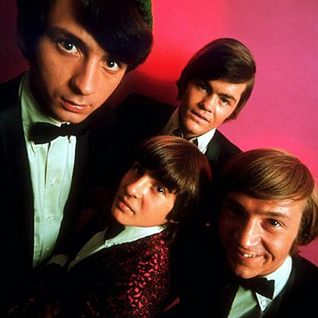
What I didn’t realize was the connection between correction fluid and The Monkees, a show my mother used to watch dozens of years ago, even before she was allowed to use correction fluid on her homework (which the nuns considered cheating). And although she watched The Monkees more for Davy Jones or even Peter Tork than for the others, it turns out that Michael Nesmith, the one in the dorky-looking toque, probably had the brainiest genetics.

You see, Bette Nesmith Graham, Michael Nesmith’s mother, invented Liquid Paper. An executive secretary at a Texas bank, she got annoyed at having to retype documents when she made a mistake, so she brought some white tempera paint to work and secretly used it for five years, tweaking the formula with the help of her son Mike’s science teacher until it was ready to market in 1956 as “Mistake Out” and later “Liquid Paper.” She sold it to Gillette in 1979 for $47 million!

That’s a lot of beer money. I asked my mum why she hadn’t invented anything as clever as Liquid Paper, particularly since she’d spent several years fawning over The Monkees (although not Michael Nesmith) and surely some inspiration should have rubbed off.

My mum said if I got any closer to the correction fluid I would be guaranteed a ride in the washing machine. She mentioned, also, that she was using Wite-Out because Liquid Paper sucks.

This intrigued me even more. Could we not do a horizontal—if not tasting, then…sniffing—of the two brands, and perhaps any generic brands and dollar-store knock-offs?

Vertical and horizontal wine tastings are fascinating opportunities to compare, respectively:

  • Different vintages of the same varietal from the same winery (vertical)
  • Wines of the same vintage and varietal but from different wineries (horizontal)

So, for correction fluid, the “sniffing” would be of different brands. (To my knowledge correction fluid is non-vintage.)

My mother doesn’t like to use the word “retarded,” but she made an exception for me at that moment, emphasizing that anyone wanting to enjoy a psychedelic journey should choose a substance that won’t cause tachycardia. She added that Liquid Paper is runnier and less opaque than Wite-Out, and that she wouldn’t waste money trying other brands.

n-propyl bromide

That got me wondering. Why is Liquid Paper runnier than Wite-Out (if what my mum says is true)? Could it be that it contains more organic solvents? Also known as thinners, these volatile organic compounds are added to correction fluid to prevent it from thickening. Over time the solvents will evaporate out of a bottle of correction fluid, causing it to get crusty and less aromatic.

In Mama Nesmith’s day toluene was the solvent used but was banned due to toxicity. Next came 1,1,1-trichloroethane, until it was banned for contributing to ozone depletion. The modern solvent in correction fluid is n-propyl bromide, which will probably end up getting banned, too, if it turns out to be neurotoxic.

It’s the neurotoxicity that attracts adolescents to huff correction fluid. Organic solvents can be psychoactive, but unfortunately they also cause the heart to beat irregularly, which can lead to death. My mum pointed out the label saying DO NOT SWALLOW OR INHALE. She said that, since I had some followers who were crazy enough to read my reviews, I should NOT review products unintended for consumption. And she added: “Get a grip, you idiot bear.”

Get a grip? I’m not the one who wanted to kiss Davy Jones.