GEKKEIKAN SAKE—A prescription for violent animals

My Fellow Inebriates,

After Sunday night’s humiliation by Miss P, my friend Scarybear—far from not being himself—has been even more of himself. Which is to say: preoccupied with annihilation while somehow giving off a stronger funk.
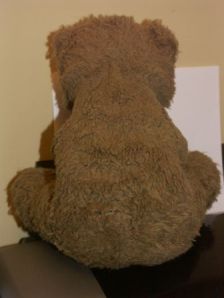
He wasn’t always this way. Scary came to the house two years before yours truly—before any of the other animals. He dominated for two years. He had attention; he had snacks; he had unlimited television. (Renting from a cruddy landlord back in 2005, my soon-to-be parents retaliated passive-agressively by running their plasma TV eighteen hours a day with only Scary in front of it.)

Alone watching the Space Channel, Scary became an expert on every iteration of Star Trek and Stargate, not to mention crap shows like Andromeda. And when Dad came home, Scary got to watch those shows again. He had things his way for a very, very long time. He was the bear.

In December 2005 everything changed. Who knew a small pink bundle could effect so sudden and absolute a coup? Home for maternity leave with P, my mum now controlled the TV, exposing Scary to reality shows, news, and, worst of all, dramas. She parked herself in front of the plasma, surfing randomly while baby P fed. If losing the Space Channel wasn’t dreadful enough for Scary, he had to witness Mum being milked and was often a baby-barf target.

All of which was compounded by an onslaught of new animals: ducks, elephants, frogs, and bears.

Everything had been perfect. And now it sucked.

It actually altered Scary’s mind. Who knows—maybe he was always an asshole and nobody knew it because he always got his way. But now that he wasn’t getting his way, he became angry. He became morose. In his head he reran episodes of sci-fi shows he’d seen enough times to memorize, obsessing about the hazards of space until those dangers seemed immediate enough to gobble him up.

Unable to get out of his obsessive rut, Scary couldn’t find another crutch. One time I suggested we join forces and open a bottle of GEKKEIKAN SAKE. He kicked my ass! After that he kicked my ass all the time, just for something to do.

Eventually the bottle did get opened, though, without Scary’s involvement. At 14.6% alcohol, it could have mellowed him out. GEKKEIKAN is one of three bottom-shelf sakes stocked at our neighborhood booze shop and distinct for being bottled in the U.S. rather than Japan. There its distinction ends.
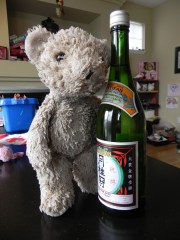
At its comparatively low price point ($10.99 for 750mL), GEKKEIKAN is a likely offering at cheap sushi outlets where Japanese provenance is unimportant. It makes perfect sense for American producers to get in on the sake game, especially with a lackluster public appetite for beer. For many sushi aficionados, a meal without sake wouldn’t be a meal, and doubtless this mentality assists sake producers in keeping a market foothold. Whether people drink sake without sushi is another matter. If anything, sake’s tether to Japanese food is probably frustrating for North American marketers wishing to expand the product’s reach.

Sake divides neatly into two camps: cold and warm.

  • Higher-end sake—the type found in small, picturesque bottles—meant to be drunk cold so as to appreciate its character. It is, after all, a type of wine, albeit made from rice.
  • Lower-end sake—bottom-shelf offerings intended for copious consumption with Japanese cuisine and drunk warm to mask any disagreeable characteristics.

Along with HAKUTSURU and Takara, GEKKEIKAN falls into the latter category. Still, I thought I’d better try it both warm and cold because that way I’d get twice as much.

Now, I am freaking terrified of the stove. I had to rely on my mother to get the sake to its optimal temperature. Child’s play, you might think, but she needs to be watched; previously she’s forgotten a saucepan of sake on the burner and allowed the precious alcohol to evaporate.

When the sake is warm-to-hot without boiling, smooth grainy flavors waft generously from the glass. On the tongue it warms and expands with medium body and hints of fruit and herbs. Much of this charm is carried in warm vapors; the heat is pleasant and alluring. Once you let GEKKEIKAN sit and cool, however, the charm is reduced.

Now that’s more like it. Eighteen liters.

This is the problem with cheap sake. Optimal temperature forgives a lot in a cheap sake; imperfections hide behind a warming sensation. Dropping to room temperature exposes both its off-notes and its simplicity.

Naturally the solution is to pound it before it cools. Keeping GEKKEIKAN at optimal temperature is an exercise in chasing the dragon. You don’t want it to disappoint you, but its sweet spot is narrow. Not that sub-ideal temperatures render it undrinkable. GEKKEIKAN is mostly harmless, although it will wreck you if you pound it for the sake of maintaining that ideal. Of course, if you’ve let it cool and can’t reheat it, you might pound it just to be done with it. It’s not offensive enough to push away because the temperature isn’t right.

Either way, it’s a recipe for getting drunk quickly.

In just the way heat masks flaws in sake, sake (I’ve often thought) could mask flaws in Scarybear. Except he’d probably be an angry drunk.

MONTSANT BESLLUM (2008)—Worth all two thousand pennies (even if THEY’RE worth $32)

Exasperated by small piles of change strewn over the floor by kids who equate coins with Lego and fling them everywhere, including the yard, my parents decided to school them about money.

To understand how laughable this is, you’d need to have lived with my parents for the past near-decade. My parents suck at managing money. They’ve paid far too much interest to Visa to have any business criticizing four-year-old Miss V for throwing a bag of nickels into the bathwater. They’re so financially oblivious that they had no idea, two days after the announcement, that the Canadian penny is being scrapped.

I had no idea either. I don’t have any money of my own. I don’t have pockets or a purse (just fears of becoming a purse).

Plenty of countries have eliminated the one-cent coin without mishap, so the idea of a penniless society isn’t that terrifying. Yes, of course businesses will milk the situation by altering their prices upward to multiples of 5, but it seems forgivable considering all the cash-register reprogramming and staff retraining that they’ll need to do.

We’re actually a dumbass country for keeping the penny in circulation as long as we have. Pennies are worth 1.6 cents apiece, costing $11 million a year to mint. You can’t buy anything with a penny. They confuse math-challenged store clerks (one panicked the other day at Zellers when my mum offered $5.02 for a $3.72 transaction). Copper theft is rampant throughout the country, highlighting how valuable the element is in comparison to the coins minted from it. (And, in fact, pennies minted since 2000 are mostly zinc rather than copper.)

It’s illegal to throw money away, but plenty of people chuck pennies away for all of the reasons above. When my mum takes it into her head to vacuum every other month or so, and I’m scrambling out of the way of the shop vac’s maw, I can hear pennies clattering into it. Pennies suck!

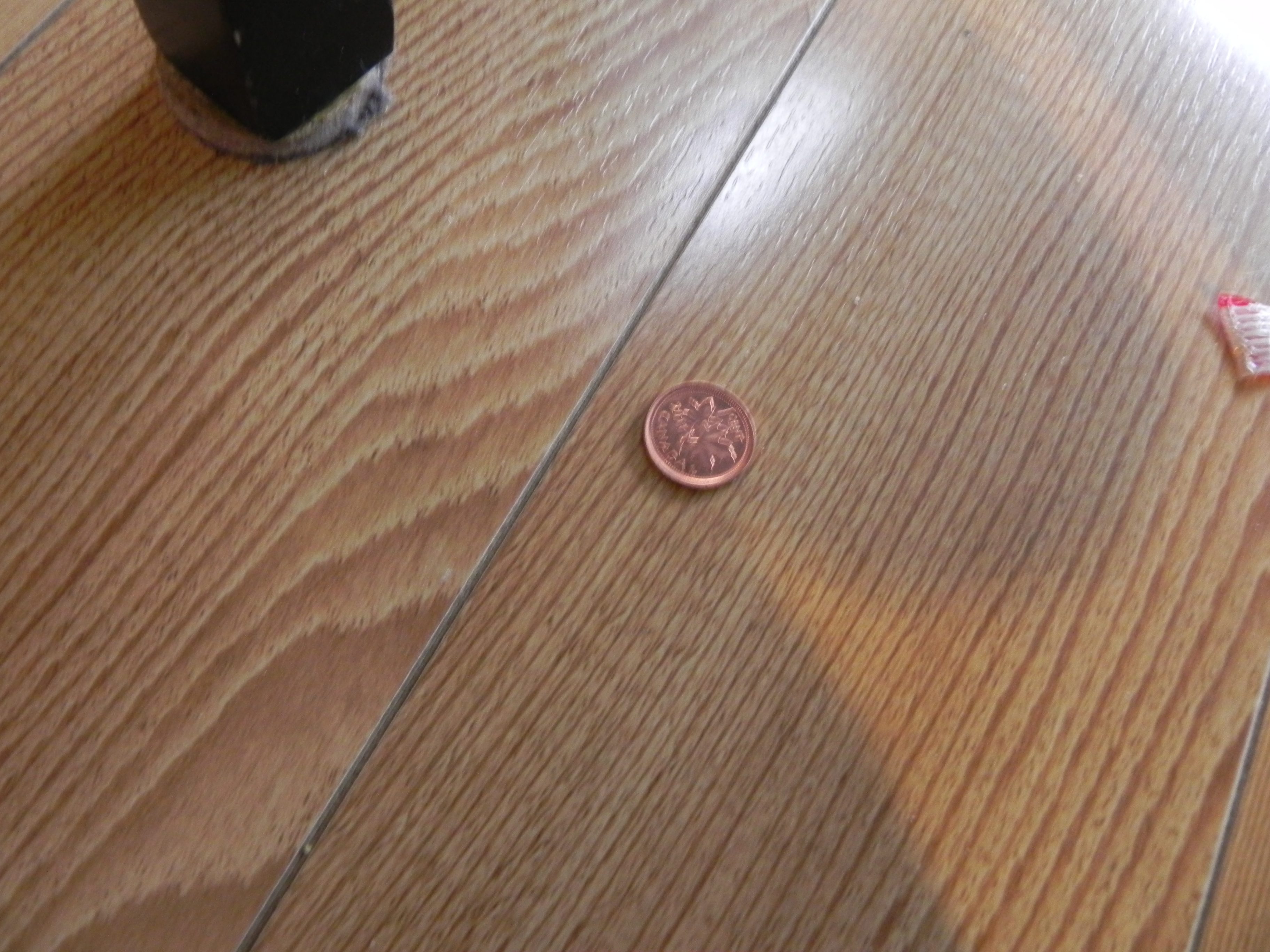
Still, I wish I had a couple of thousand pennies to haul to the liquor store. They’d weigh ten pounds, which would almost kill me, but I’d come home with another bottle of MONTSANT BESLLUM (2008), the wine we drank last night while watching Breaking Bad. We’re two seasons behind on the show—considerably behind my papa and bionically-kneed nana, who have been gorging themselves on Breaking Bad. It’s tough to watch a show about crystal meth turf wars with two little girls on the couch beside us, so we have to wait until after bedtime to watch, unless we want to explain how addicts sometimes get sprayed with bullets at the bus stop or choke to death on their own vomit.

The 2008 BESLLUM is a 50/50 mix of Garnacha (Grenache) and Carignan, aged 16 months in French oak. The two varietals complement each other with their respective low and high acid profiles, resulting in a lush, opulent wine that exudes cherries, plums, and dates. Smooth on the palate while intense and warming, the wine develops admirably as it sits, becoming an entertainment unto itself. In truth, BESLLUM is enough of a conversation piece to warrant turning off the TV and focusing on the taste.

BUT NOT IN THE MIDDLE OF A PARKING-LOT SHOOTOUT IN BREAKING BAD! The intense scene may have distracted us a tiny bit from the magic of the 2008 BESLLUM, necessitating further tests. Sadly though, I don’t have two thousand pennies. I did attempt to raid the kids’ piggybanks, at which point I learned about my parents’ idea to teach them about money. Here’s the half-assed plan strategy:

The kids will put half their money in the bank. With the other half they’ll buy something vapid and retarded My Filly ponies, which cost, with tax, $3.35, or 335 pennies. This teaches the girls that $3.35 equals:

It teaches me that the 2008 BESLLUM equals:

Sigh.

Liqueur-filled Easter eggs—beyond my talents and then some

My Fellow Inebriates,

The success of any project depends on three factors:

At first, making our own liqueur-filled Easter eggs seemed like an ingenious idea. We have:

Time—What the hell else does my mum have to do? (Ouch! Has someone ever taken their fingernail and flicked you on the ass? Ouch!) To rephrase: she’s home all day with a four-year-old who needs to be constantly engaged and who would find DIY Easter eggs delightful (if you ignore the booze component). Check.

Resources—My mum is a fiend for and hoarder of chocolate. If she hasn’t already reallocated valuable grocery/booze funds for chocolate, she can be persuaded to invest in some. Besides, her ass requests it. (Owie!) As for the necessary booze, I can get my dad to buy it; he loves going to the liquor store. Check.

Talent—Supposedly, when it comes to making desserts, my mother knows her shit. And she’s had a lot of practice managing four-year-olds in the kitchen. Check.

So I was optimistic, my fellow inebriates. By Easter we could have liqueur-filled eggs!

But my parents were hesitant. They questioned how liquor really fit into our Sunday morning Easter egg hunt with the kids. They said they didn’t really care for liqueur chocolates. They said I was being a nuisance.

And suddenly my project triangle looked like this:

I felt my own optimism dwindling. But oh well. Nothing for it but to dive in. How the hell do you make liqueur-filled chocolates anyway?

According to the most comprehensive instructions I could find, you need a lot of equipment, including:

  • a scale that can measure to the gram
  • an instant-read digital thermometer
  • two 9”x13” baking dishes
  • a metal mesh strainer/sifter
  • a silicone pastry brush
  • four to eight boxes of cornstarch (!!)

OMG! Now our triangle looks like this:

Yes, that’s my mum’s finger.

I’ve always wondered how they get fillings into chocolates. Cadbury has been milking the Caramilk Secret campaign for years. Do they:

  • freeze the filling and then coat it with chocolate?
  • create the chocolate molds in two halves, pour the filling in, and seal the halves together?
  • somehow create hollow chocolate shapes and then inject the filling in?

None of the above, although Cadbury engineers considered the first option, only to dismiss it because it was too expensive and time-consuming. Instead (are you ready for this?) they pour the chocolate into a mold, then add squares of solid caramel, to which they then add a natural enzyme that converts it to a liquid, by which time they’ve already sealed it in with a final layer of chocolate.

Wow! I’d find that really interesting if the filling were booze instead of caramel. But it’s irrelevant to the manufacture of liqueur-filled chocolates.

Back to the ingredient list. You may be wondering what the hell all that cornstarch is for. According to  the instructions, you have to dry it out thoroughly, then make a big bed of it, then use objects to make indentations in it—in our case, Easter-egg shaped cavities. Which means we also need to buy an Easter egg shape.

This is fast becoming a drain on our alcohol fund.

Okay, so you make your shapes in the cornstarch. (Note: no open flame near the cornstarch. It can make fireballs.)

That cornstarch is going to go everywhere. If I get near it I’ll look like Cocaine Bear. Just a little less fierce.

But the next part is even scarier for a small, flammable bear. Next we need to use a saucepan to cook sugar to a specific temperature (holy shit, the tolerance is, like, 3 degrees; we are totally gonna mess this up). Then, once the mercury’s hit that ultra-specific line on the candy thermometer my mum says she bloody well isn’t going to buy, THEN, hallelujah, we can add the liquor. Then we have to stir it at the perfect pace or risk inducing crystallization. OMG! Did I mention we’re going to mess this up?

At this point we should be beside ourselves with anxiety. We’ll need to fend off an eager four-year-old from the stovetop part of it and, at that critical period of temperature measurement, find some other source of entertainment for her, all the while covered with white powder (at which point a cop will probably knock on the door to bestow parking tickets on us, misjudge the situation and bust us for possession). BUT, assuming we make it to this point, now we have to fill the molds with our mixture.

THEN we have to sift cornstarch over the candies (or just shake it off our bodies onto them). And THEN we have to wait 3-5 hours. OMFG!! Did I mention there’s a four-year-old in the kitchen? What do you think she’ll say when we tell her we have to wait 3-5 hours? How many freaking times can she watch Tangled?

Okay, so assuming we survive all that, THEN we have to flip this mess over and leave it overnight.

The next morning we can pull the candies out of the cornstarch and coat them with chocolate.

Photo: Steven Joyce

Up against this recipe, our small resources, limited time, and minuscule talent come up short. My mum says I’m on my own—there’s no goddamn way she’s going to make liqueur-filled Easter eggs. Ever. She says I can damn well get one of those big Nestle eggs, jettison the Smarties from inside and fill the whole thing up with Laguvulin, and good luck.

Sounds like a plan.