
My Fellow Inebriates,
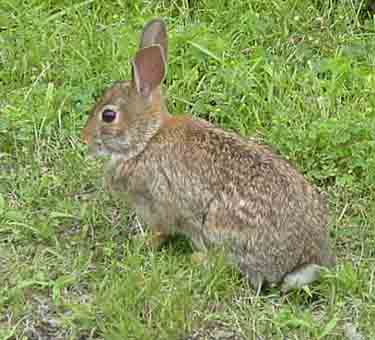 The greenspace near our townhouse is teeming with baby bunnies. On the way to school the kids look out for these distant relatives of the Easter Bunny, hoping to catch a glimpse through the blackberry bushes.
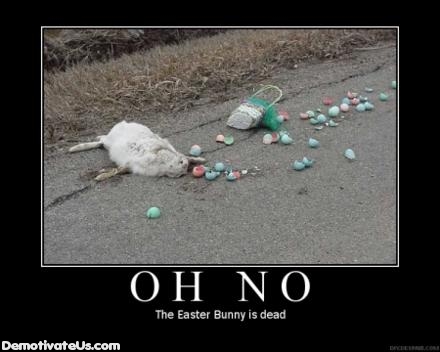
If you pay attention, you can see the occasional cottontail bouncing along, but almost as often you can see them eviscerated by the path. With apologies to my friend Violet, bunnies are some of the dumbest animals that ever lived—they just don’t know how to avoid cats and coyotes. Nor do they look both ways when they cross the road, which means my parents sometimes have to stage a diversion on the way to school so the kids don’t get an eyeful of leporine gore. “Check out those dandelions!” my mum said, for example, while passing a fur-and-blood pancake on 66 Avenue being sampled by a dog whose oblivious owner apparently didn’t mind her animal venturing into traffic.

Sorry, Violet
If bunnies were a little smarter, the Easter Bunny wouldn’t have to do everything each year. He could delegate, the way Santa does, sitting on his ass all year exploiting the elves until his big night. But bunnies are not so bright.
Which is why I haven’t bothered to bug the Easter Bunny for anything. I mean, does the Easter Bunny even have a postal code? I can hit Santa up at H0H 0H0, but where the hell do I send my Easter list? And does the Easter Bunny even care whether I’ve been good or bad? Does the Easter Bunny keep track? Because I get the sense that bunnies are about as smart as a sack of doorknobs.
 For instance, when my mum suggested to the kids that they write the Easter Bunny a letter, Miss P said, “Nah, he doesn’t know how to read; he’s a bunny.” It made perfect sense to her that, despite the daunting logistics of delivering eggs to the world’s children, despite the cleverness and stealth required to get them inside houses protected by Alarm Force, and despite his enormous commitment to inducing a global diabetic coma, the Easter Bunny cannot read.
This is precisely the sort of epistemological compartmentalization at which our Fraser Valley demographic excels, which is to say that if we ever let Miss P get into the wrong hands we may find her embracing Noah’s Ark while remarking that the biomass of all known insects on the planet—two of each—would exceed the capacity of the Titanic, and happily allowing the two ideas to coexist.
But who wants to mess with magic? The Easter Bunny is undoubtedly a magical creature—a creature whose activities cannot be specifically disproven. So I thought I’d make a list for him, just in case he’s literate enough to Google his name and read it:
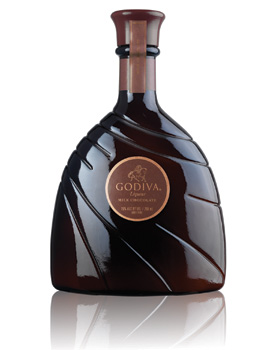


You have to hedge your bets, right?

Or not.
But were we right to shield the kids from the sight of roadkill? They’ve seen lots of dead birds and insects before. Miss V once used a magnifying glass to bash the shit out of a snail at pre-K while the teacher wasn’t looking. They eat animals from time to time… just not car-flattened ones. But there’s something so cute about bunnies…my mum didn’t want them to see a dead one.
 For those who don’t mind the sight of a dead bunny—especially one that’s been dealt a glancing blow off the car hood and isn’t flat—why not scoop that dead little critter up? Take it home and make a stew. Wild animals have a favorable nutritional profile: high protein and low fat. And roadkill is free, which means you don’t have to yank out your debit card at Walmart; you just need a good recipe book and an open mind.
Ahhh, you solid food eaters, you have it made if you live in a neighborhood full of stupid bunnies who can’t get to the other side of the road.
 Not being a solids fan myself, I’ll leave that to you all. But I have a wine pairing suggestion: YALUMBA MENZIES “THE CIGAR” CABERNET SAUVIGNON (2009). Coonawarra residents refer to the uniquely shaped strip of terra rossa soil that is home to some of Australia’s most famous vineyards as “the Cigar.” The Menzies Vineyard, founded in 1987, is part of this region and enjoys rich, red soil, limestone, pure artesian water, and a long, cool ripening season.
You may think I’m going to trash THE CIGAR as an offensive accompaniment to possum stew, but I only mention it in connection with roadkill because of the wild kangaroos that pose a driving hazard in Australia, accounting for 71% of animal-related insurance claims (eight times as many as dogs and 14 times as many as wombats). Kangaroos, who are obviously as cognizant of traffic safety as rabbits, pose a serious nuisance—enough to warrant “roo bars” on vehicles driving in the bush. They are well known for wandering onto the road and into a high-protein, low-fat stew.

The reason for "roo bars" on vehicles
While you may have qualms about scraping a rabbit off 66 Avenue and cooking it up, a kangaroo is a much more worthy feast, although, in the hot Australian climate and with all sorts of competing predators, you probably want to harvest the roo from the road while it’s going toward the light and not too long after.
You need wine with depth and earthiness to stand up to wild game, the euphemism you’d probably use if serving roadkill to dinner guests. THE CIGAR, with its distinctive forest-floor earthiness, bursting blackcurrant and tobacco notes, would pair very well with game. It is delightfully balanced with plenty of complexity, good tannins, and a long finish.
Truthfully, I’d advise drinking THE CIGAR by itself, undistracted by other flavors. But—if the Easter Bunny has a mishap this year and ends up on your neighbor’s barbecue, this would be a good wine to show up with.




 Liquorstore Bear