My mother isn’t always admiration-worthy but I do have to hand it to her for abstaining from alcohol during her pregnancies. True, it wasn’t the sacrifice for her that it would have been for me; she didn’t suffer delirium tremens or need to be straitjacketed until the 21-day mark—but she did fend off tremendous beer cravings (although she had one or two occasional sneaky sips). After all, going cold turkey on booze is part of the pregnancy deal.
Except that it’s a relatively new deal.
Prior to a 1973 paper in the Lancet, fetal alcohol syndrome was not recognized. If women were counseled to abstain—which historically they often weren’t—the advice was based on common sense rather than scientific data. In other words, it’s simple common sense not to binge-drink, pregnant or not, but pregnancy is such a taxing condition and so replete with nausea that it just makes sense to advise women not to drink excessively.
 But is there any historical wisdom we can cite that relates not to the condition of pregnancy but to the fetus? Strangely enough, literature is lacking in connections between alcohol and deleterious effects on the unborn.
You’d think there’d be an abundance. The bible, for instance, is full of dietary/hygienic exhortations and proscriptions, and it certainly doesn’t stint when it comes to limiting women’s behavior, but those cautions that it expresses against drinking pertain mostly to preconception—i.e., the husband’s ability to get it up and keep it up. As far as the resulting pregnancy? Eerily silent on the matter.
Okay, so the bible is a pretty old document. What about more recent literature? Canadian scholar Ernest Abel, author of numerous articles on FAS, has pored through Greek, Roman, and European history, from ancient to recent, and almost no references to a causal connection between liquor and fetal harm.
FAS is present in an estimated 0.02-0.15% of live births, affecting growth, facial and cranial features, structural, neurological, and intellectual development. FAS children exhibit learning difficulties, low impulse control, and an array of cognitive and motor-skill challenges—rendered all the more tragic given the preventability of the condition.
But you’d think, from popular magazine articles, product warning labels, and public service announcements about alcohol, that ONE drink could cause FAS. The accepted mantra is that “we don’t know how many drinks cause FAS”; therefore, pregnant women shouldn’t drink at all. But this seems a little facile. Surely we have some idea?
The problem with information is that simplicity always reigns supreme. It’s far catchier and easier for a magazine to demonize alcohol during pregnancy than it is to wade into a scientific journal for actual data. Data is boring. And if you bother to dig, and find that 18 units of alcohol per week are deleterious to a fetus, then well! How can you write a headline like: “Is your baby at risk? The scary truth about those 18 drinks!”
According to the Royal College of Obstetricians and Gynaecologists (RCOG):
- No adverse effects on pregnancy outcome have been proven with a consumption of less than 120 gms of alcohol (around 15 units) per week.
- Consumption of 120 gms (15 units) or more per week has been associated with a reduction in birth weight.
- Consumption of more than 160 gms (20 units) per week is associated with intellectual impairment in children.
A unit is one 8-gram drink:
- ½ pint of ordinary strength beer, lager, cider
- ¼ pint of strong beer or lager
- 1 small glass of wine
- 1 single measure of spirits
- 1 small glass of sherry
Is society incapable of parsing this? Does society consider women so childishly incompetent that it needs to dumb this down from moderate limits to no drinks at all? There are miles of difference between 15 drinks a week and none.
Understandably, many pregnant women might be uncomfortable approaching the 15-drink maximum, and I doubt many pregnant women would even want to. But how did we get to the ad absurdum conclusion that one drink is evil? Where’s the moderation here?
Perhaps the fear is that some pregnant women—you know how they can’t be trusted, with hormones and whatnot—might decide to have 15 drinks all at once. Imagine! I mean, raise your hands—does anyone not realize that would be bad? And if we’re concerned about the few pregnant idiots who might decide to stack their drinks (or take it to the next level and stack two weeks’ worth!), shouldn’t we be worried about them in a more general sense? For instance, they’re probably not eating well either, and then there’s the heroin they’re injecting…
And then there’s the built-in assumption that regardless of what’s proven harmless, complete abstinence is still best. That’s not necessarily true. A British study of over 18,000 households revealed that if a pregnant mother had one or two drinks per week:
- sons had fewer problems with behavior and hyperactivity
- daughters had fewer peer-related and/or emotional problems
- boys had better cognitive abilities than those born to abstainers
The scientific establishment leapt to discredit this study, citing socioeconomic factors (e.g., casual-drinking mothers tended to have higher income/education). These and other variables tend to confound the issue rather than clarify it.

iStockphoto
But what’s troubling is the guilt heaped upon women who have a few drinks here and there before discovering they’re pregnant. Those pregnancies are fraught with worry about the damage potentially done to their developing babies—and that worry is never alleviated by the media. If anything, it’s compounded by a society that is ever-vigilant to ensure that pregnant women abstain 100% from the demon alcohol. It’s patronizing, it’s over-simplified, and it’s unfair.
I’m just a dumb bear without a medical degree, so I’d never tell anyone to drink while pregnant—it’s not my right to do so—but for anyone who’s worried about the one or two drinks consumed before knowing, or feeling guilty for indulging in a Guinness, here are some interesting links:
Mixing medical advice, alcohol and pregnancy
Oxford Journals: Alcohol and Alcoholism—Commentary on the Recommendations of the Royal College of Obstetricians and Gynaecologists Concerning Alcohol Consumption in Pregnancy
Fetal Alcohol Syndrome: “The American Paradox”
Fetal Alcohol Syndrome: The Origins of a Moral Panic
Was the Fetal Alcohol Syndrome Recognized by the Greeks and Romans?


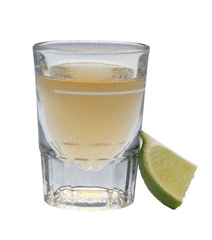
 Your body needs traces of zinc to manufacture important enzymes such as liver alcohol dehydrogenase, responsible for processing alcohol. (Did you know your body makes its own continuous supply of alcohol? You need zinc to break it down.) You can find zinc in an array of foods. How about a whiskey?
 Another player in enzymatic functions, manganese turns up in many foods, notably grains such as spelt and brown rice. How about some sake?




 Liquorstore Bear