
Not one, not two, but THREE friends posted this on my Facebook wall today.

Which, when you think about it, is actually kind of threatening.
When I first saw it I immediately went looking for my friend Scarybear. Not that he’s been known to venture into Bosnia-Herzegovina—or even off the couch—but I was concerned.
It took a bit of a search, but then, sure enough, there he was under the couch, wearing a dress.

“I will kill you if you post that photo, LB.”
Which calls for wine, don’t you think? A palpable threat has been evaded. Oh, come on, just because we don’t always like Scary, it doesn’t mean we want him to be dead. Let’s have some vino.

VIŇA CHELA RESERVE (2011) is an organic Argentine Malbec vinified from high-altitude grapes from the foot of the Andes. According to the bottle notes, the grapes were harvested early in the morning, then cold-macerated for three days at temperatures not exceeding 10°C to achieve optimal extraction. Then the wine was aged for seven months in French and American oak.
What the hell does all that mean, my fellow inebriates? Cold maceration, also known as the “cold soak method,” was originally introduced for Pinot Noir in an effort to get the finicky grapes to pony up max flavor instead of delivering half-assed astringent wine. Cold soaking proved successful for Pinot, and winemakers followed suit with other varietals, thereby capturing deeper color and elusive aromatics plus higher-quality tannins.

At the very least, letting your grapes sit around at low temperature for a few days allows you to establish their chemistry and see what kind of sugars they’re going to surrender. The downside is you risk some spoilage and rogue fermentation, but cold soakers still swear by the method. Not that the science is precise—adherents’ reasons for cold soaking vary widely. Perhaps, they argue, certain qualities can be extracted best before the sugar develops into ethanol. Results claimed include increased flavors and aromas; higher complexity; more weighty mouthfeel; more intense color; and a higher-quality tannic profile.
But the jury’s still out on cold maceration. To date, few studies have been done. And although I urged my parents to run out and buy an Argentine Malbec that hadn’t been cold-macerated (as a control), they only commented that my alcohol-seeking ploys were getting more creative. Kudos, but no additional wine.
VIŇA CHELA RESERVE it is, then. Not very scientific of us to drink one bottle only, but oh well. Decanted, it looks like dark purple ink, dense and inviting. Off the top you get intense dark fruits and spice with a little bread yeast and cocoa. Not for the faint of heart (and 14% alcohol), VIŇA CHELA RESERVE coats the palate with a concentrated burst—thick and chewy and ripe. As it sits on the tongue it reveals bittersweet chocolate and herbaceous hints beneath buckets of black fruit. This wine is huge, people. Whatever S.A.E.V. Escorihuela did to extract this much fruit, it worked and then some.
And the best part? The bottle was $14. This Malbec is another great find, my fellow inebriates, so try and get your paws on it. If you are a bear, you will need someone with opposable thumbs to help you, which will put you in their debt, which sucks, but it’s better than being strangled by a Bosnian shepherd.

Scarybear says: “You just try coming to Canada.”


 Which is to say, I like BEAR FLAG. It’s not my favorite $13 wine, nor is it the most interesting wine in its price range. But it has a wacky, freaky label, especially if you like weird art, and—for you solid food fans—it probably would go pretty well with, um, what’s a solid food you would barbeque? How about a hamburger? I bet solid-food eaters would love BEAR FLAG with a hamburger. But they’d probably be freaked out when they opened the freezer to take the meat out and there was this frozen alcoholic bear beside it staring at them accusingly.
 Beckoning from the fridge: VINA ESMERALDA TORRES (2011). Billed by our favorite booze-shop consultant as “the best turkey wine” he’s had in the last 20 years, this Spanish offering retails for $13.99 and consists of Moscatel d’Alexandrie (85%) and Gewurztraminer (15%). I am too drunk to put the little diacritics on those varietals, but you know what I mean. Nor do I care whether this wine pairs with turkey, which gets served maybe once or twice a year at LBHQ and invariably demands the sacrifice of a full bottle of sparkling wine to the cooking process—a sickening travesty compounded by the asparagus that may or may not accompany the cooked bird.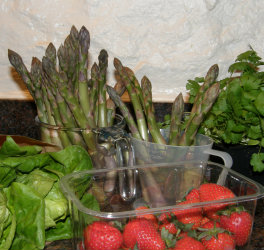


 Liquorstore Bear