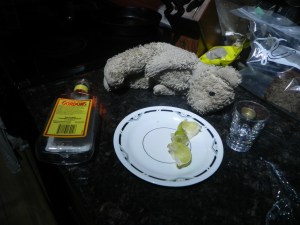
SANTA ANA CASA DE CAMPO TORRONTES (2010)

Tonight is Meet-the-Teacher evening and my parents’ latest killjoy rationale for staying sober in the early afternoon. (Others include “working” and “taking the kids to the park.”)

And then there’s the overriding concession to social mores: “It’s early, buddy.”

Which got me thinking: How early is too early? Do you have to be middle-aged, uptight, and live in Langley to eschew alcohol before 5 p.m.? Or does everybody operate that way except yours truly and his hobo cohort?

Because, seriously, if the clock says 4:59, my mother won’t crack a beer. If it’s not 5:00, it’s not happening—unless it’s Christmas or her birthday or Thanksgiving or Canada Day or we have company or somebody else does it first. Since the most obvious somebody doesn’t have thumbs to open bottles, and most days aren’t celebratory (I pitched Rosh Hashanah but she didn’t bite), the clock tyrannizes me with its slow ticking toward happy hour.

Apparently all societies have proscriptions on time of day for drinking. (Holy crap, why?) Jittering away until dinner is a cross-cultural norm, my fellow inebriates. A study of 14 countries shows that drinking is much more prevalent after 5 p.m. and on weekends. Drinking that occurs outside of these socially determined times correlates strongly with alcohol-related social problems. Researchers concluded that problem drinkers were most likely to drink at these times. OMG!

The study strikes a note because I would be more likely to drink at these times. If I had my druthers, by 5 o’clock I wouldn’t be drinking anything at all; I’d be heaving away somewhere behind the couch.

But I’d never have sampled SANTA ANA CASA DE CAMPO TORRONTES (2010). It would have been drunk by my parents (“peacefully”) during my passed-out time.

Torrontes grapes look a lot like the green grapes you find at the supermarket. I have no idea whether they’re the same, nor has it occurred to me to eat them, but if they are, the kids’ lunchbags often contain the ingredients for a fresh, aromatic white wine with moderate acidity. Not a waste, as the kids do need to eat, but it’s good to know Torrontes grapes abound throughout Europe and the Americas. Three variants exist, the most common being Torrontes Riojano, the most likely ingredient in SANTA ANA CASA DE CAMPO.

Torrontes doesn’t age well and is best consumed within a year of its vintage. If you have a bottle from 2010 you should drink it right now, even if it’s not 5 o’clock yet.

I expected a mellow, caressing Torrontes-style fruitiness to wash over me, so the zestiness of SANTA ANA CASA DE CAMPO was bracing. Pale lemon yellow, it exudes fragrant citrus and floral notes, perhaps some jasmine tea. One whiff and you know this wine isn’t mellow; it’s zippy, zingy, and whatever other Z words you can think of. The aromas translate logically from nose to palate—bright, well-balanced chords delivered with light-to-moderate mouthfeel and a finish that doesn’t overstay its welcome. Certainly a yummy wine, but not as generous and lingering as the varietal can be.

The bottle recommends pairing SANTA ANA CASA DE CAMPO with seafood or spicy cuisine—i.e., dinner. But this seems too late in the day to enjoy such a crisp Torrontes. Better to pair it with a spicy breakfast omelet.

Better still, just wake up and open the bottle.

(Holy crap, where is the family? I thought it was Meet-the-Teacher evening. It’s night! There are stars out! Do you think they’ve made a detour to the liquor store?)


BARAHONDA ROBLE MONASTRELL SYRAH (2008)—Whatever the hell Labor Day is, this wine should be part of it

In diapers

For bears like me and Scarybear (and lately Fluffy too), Labor Day marks not the beginning of an arduous work cycle but the end of two months of being dragged through the yard, decorated with flowers, festooned with miniature ponies, draped with various dishtowel-cum-frocks (you know what I mean, don’t be dirty)—in short, a laborious summer. We bears don’t care if we can’t wear white shoes after September 3, as long as we don’t have to don any more dresses—at least not before 3 p.m. each weekday. Yes! The kids—both kids—are returning to school, and we bears will be left to hang out and stare at the walls, or whatever you might think we do when nobody’s looking.

In bondage

What the hell does Labor Day signify anyway? Who really has the whole summer off? Nobody at LBHQ had the summer off. Dad worked, Mum worked (here and there), the kids worked on their X-box skills, Scary and I got worked over by the kids, and we all changed headquarters, which was a lot of damn work.

Despite the bear abuse freely countenanced by my parents, I’ll miss summer. The best thing about it was that, as soon as it got hot out, my dad would buy beer. In fact, everything about our summer was a trigger to buy beer. Packing? Beer! Moving? Beer! Unpacking? Beer!

But surely autumn offers equivalent booze-buying triggers. If anything the approach of inclement weather should spur us to polish off the gin, pound any lager occupying the fridge, and welcome heavier, more robust delights like the BARAHONDA ROBLE MONASTRELL SYRAH (2008).

Also known as Mourvèdre, Monastrell grapes are known for producing intensely fruity, tannic, high-alcohol wines that, if not aged correctly, can evince barnyardy notes. The grapes are hard to please, preferring hot sun and high irrigation plus a crapload of viticultural TLC. Monastrell is often blended with Syrah because of the tannic structure it imparts, as with BARAHONDA ROBLE.

Our favorite liquor store consultant hadn’t yet tried this wine; he said it was new to the store. But he did advise pairing it with food—barbecued animal perhaps, or pasta with red sauce. Even though this dude is the full-on maestro when it comes to wine tasting, we decided to ignore his advice. My mother assured him she would cut some cheese, which was a lie, at least in one sense.

At the time of drinking, the kids were on Vancouver Island with their (our) grandparents. The house was very quiet and calm. The mess hadn’t ratcheted up throughout the day. There wasn’t the usual post-bedtime fallout and clean-up. I’d spent the day on the same part of the couch all day, unsummoned for play. It was eerie.

Now, either this weird calmness conjured up some crazy, silvery sensitivity on our palates, or BARAHONDA ROBLE was freaking awesome. Maybe both. Rich maroon in the glass, it demonstrated generous legs as it whispered huskily of blackberries and oaky refinement. Swirled in the glass, those blackfruit flavors concentrated into an olfactory rush, layering on luscious dark fruits.

And the sip? OMG, my fellow inebriates!! Does wine really taste that much better with the kids out of the house or was this wine just that insanely good? Ahhhh, to ever know that, we’d have to buy another bottle and drink it with the kids at home. But yes, this wine is—apologies, Robert Parker—this wine is fucking-A. Crossing the front palate like an old-money guest with an armload of gifts, BARAHONDA ROBLE redoubles the fruit-laden generosity promised to the nose with cherry, dried fruit, and gorgeous minerality. It unloads its parcels in the foyer then charges to mid-palate, still producing gifts—well-integrated oak, rich jam, and deep earthiness. It continues rhapsodically discharging these wondrous flavours, finishing with grippy tannins before depositing its wonderful 14% alcohol in one’s furry tummy.

Was it a sensory orgy? BARAHONDA ROBLE was too disciplined, too structured for that. It stopped just short of that, and just as well. You wouldn’t—couldn’t—get the impression that this wine wasn’t in control of the dance.

What a marvelous under-$20 find from the Spanish wine aisle in our local booze shop. A spectacular summer ender, too, and a product to stock for the coming cold months.

With a product like BARAHONDA ROBLE warming your fur, who needs summer? Labor Day’s arrival is welcome, especially if it occasions another wine purchase.

THE WOLFTRAP VIOGNIER CHENIN BLANC GRENACHE BLANC (2011)—Another one Dad missed out on

My mother and I made twin (fraternal, not identical) realizations this week.

Hers: When we buy gin we drink it all. We mustn’t buy gin.

Mine: When we buy gin we drink it all. We must buy in bulk. We must get more samples. We must take our gin consumption to the next level.

These complementary insights aside, it was a good week for drinking. We moved house, which involved a lot of beer, and my dad went on another golf-tourney-calling-itself-a-business trip, which always means white wine. You see, my fellow inebriates, my dad isn’t a fan of white wine, so whenever he goes away, we buy it. For several reasons:

We deserve it. We are doing all bedtimes, all meals, all playdates, all the time. We need it.

We are afraid. We don’t know yet if Fluffy left his paranormal squatter at the old townhouse or if he moved with us. And since this house, being older, naturally goes bump in the night, we won’t know for a while if Fluffy is still haunted. So we need something at night to take the edge off while Dad’s away.

My dad is useless about white wine. He doesn’t get it at all. So we break it out when he leaves town.

This time we chose THE WOLFTRAP VIOGNIER CHENIN BLANC GRENACHE BLANC (2011). We hadn’t been disappointed by this much-lauded South African winery before, and we had $15 bucks (and not much else) left over after paying the movers, which amounted to a hell yes.

The only downside to drinking white wine are the tall glasses. I have to stand on my toes to get any—you’ll have to believe me because my mum wouldn’t take a picture (she said I was a narcissist). Although we have a set of Reidel stemless red wine glasses, we’ve resisted buying their white counterparts—because why would you want to get your sweaty paws all over your lovely chilled glass? Whether the glass shape makes a perceptible difference…I defer to The Dogs of Beer.

After a long day of unpacking (one of us) and observing the unpacking (the one without thumbs), THE WOLFTRAP was exactly the wine we needed. French oak-matured, this intriguing blend features 57% Viognier, 32% Chenin Blanc, and 11% Grenache Blanc. It wafts scented pear and grapefruit peel with ripe peaches behind—all items bears crave and would root through someone’s garbage for. But unlike my friend Scarybear’s Ideal Lunch, these aromas are zesty and fresh, with satisfying follow-through on the palate. The mouthfeel is generous and layered, almost buttery yet zingy with hints of vanilla and hazelnut, lingering much longer than I had any business expecting.

This intriguing white blend is a find for under $15—well worth having again, even if my dad’s home, which he is now. Did I mention he won a bike at his company’s golf tournament? Not bad, Dad! But he forgot to wear sunblock, so now he looks like a lobster.