Think abstaining will make you live longer? Guess again!

In a quest to find philosophically compatible scientific studies, I’ve learned the following:

Teetotalers are more likely to die than moderate drinkers.

Just say "no." Oh wait, I'm dead.

Yes, my fellow inebriates, it’s true! Scientists at Virginia Tech conducted a five-year study and found that lifetime abstainers were 19% more likely than regular drinkers (one or two drinks, three or more times a week) to die.

And get this—the same study found that teetotalers were 56% more likely to experience coronary heart disease than average drinkers. OMG! And lest you think this was a small study, the data came from half a million North Americans.

This is exactly the sort of data I was seeking when I embarked on a short Internet search this morning. I probably should have stopped reading right there but instead I foolishly continued to the ad absurdum conclusion:

Heavy drinking is more detrimental to health than abstinence. (But not by a lot! Boozers still have better cardiac profiles than abstainers.) Perhaps the health detriments they ascribe to drinking involve wandering in front of buses, etc.—it’s probably a catch-all collection of hazards that drunks like myself blindly embrace.
So how does the study define “heavy drinking”? Well, the definition is actually pretty strict: three drinks, three or more times a week. Which sounds like breakfast. Thinking this definition seemed assholish, I decided to contact the study’s authors, but I couldn’t find the actual study—just the Men’s Health distillation of it from which I cobbled this post.

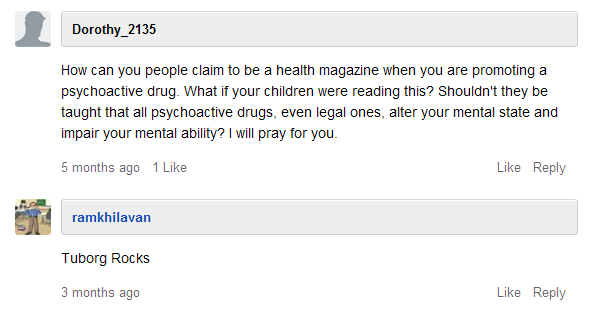
So is there an actual study, or is the alcohol industry behind it all, and if so, why does the study not promote my lifestyle, which would sell the most booze? If there is a study, it certainly has some potential haters:
The upshot? Feel good about drinking here and there; it’s beneficial. For those of you sharing the dark side with this alcoholic bear, just make sure you use the crosswalk 😉

The nasty truth about alcohol and sleep

My Fellow Inebriates,

Ever wonder why drunken sleep doesn’t seem to provide any real rest?

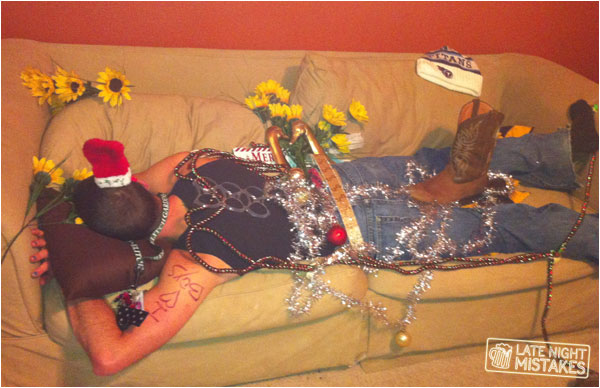
You know the scenario: You’ve just drunk a dozen beers, peed a dozen times and reached that state where you look in the mirror and think, OMG, is that really me? Then your stomach starts lurching, you feel like you’re on a boat, and your dinner starts offering to show itself again. Let’s say you manage to control the reverse peristalsis (against your body’s wise wish to expel toxins). You congratulate yourself for holding it down and stagger into bed with your boots still on.

Typical Monday night. If you’re with friends, they cite the boots-on rule and mark you up with Sharpies. If you’re alone, you simply remain unconscious for five or six hours, then finish out the night sleeping fitfully. Either way you wake up feeling like ass, swearing you won’t do it again, and wondering why the six hours you spent on top of your bedcovers seemed to do you absolutely no good.

Alcoholics everywhere intuitively know this, but now it’s been confirmed in a Japanese study.* Passed-out sleep is different from regular sleep. Without alcohol in your system, sleep provides rest and recovery for your body; your parasympathetic nervous system takes over from your sympathetic nervous system, lowering your heart rate and initiating muscle relaxation. But if you’re gooned, your sympathetic nervous system—ordinarily dominant when you’re aware and alert—doesn’t let go. You may be technically unconscious, but your nervous system thinks you’re still awake, so those demanding functions never go offline and take a rest.

Whoa! Another reason to feel like crap after a bender! Not only do you wake up dehydrated, thirsty, worried about the shit you probably said and did, not to mention scribbled all over—your sympathetic nervous system has effectively been awake most of the night for no good reason. That sucks!

According to the study, suppressed parasympathetic activity correlates strongly with insomnia. If you habitually down a few drinks before bedtime, you might end up having difficulty:

  • getting to sleep
  • getting up early
  • achieving deep sleep
  • staying asleep

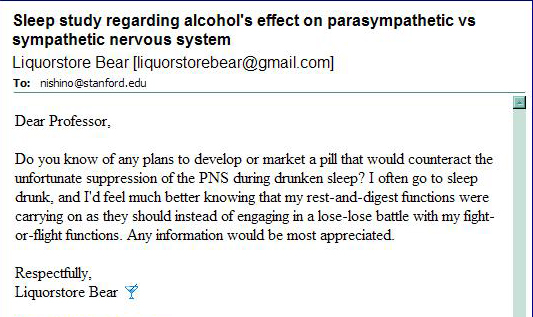
This all struck me as pretty unacceptable, so I contacted Seiji Nishino, director of the Sleep & Circadian Neurobiology Laboratory at Stanford:

Seiji Nishino

He looks like a nice enough guy, so I expect he’ll come back with an answer fairly quickly, although being a psychiatrist he must be inundated with nuts asking him questions. I will be patient and drink some Malibu while I’m waiting.

*Reference: Alcoholism: Clinical & Experimental Research. Published Online August 16, 2011. “Alcohol Has a Dose-Related Effect on Parasympathetic Nerve Activity During Sleep,” Yohei Sagawa, Hideaki Kondo, Namiko Matsubuchi, Takaubu Takemura, Hironobu Kanayama, Yoshihiko Kaneko, Takashi Kanbayashi, Yasuo Hishikawa, Tetsuo Shimizu

More snowpeople! Sexy, drunk and violent!

Boo!

Get it, buddy, you deserve it.

Don't do it, dude, you're gonna melt in a few days anyhow!

Oh my...

Awww, that's more wholesome now.

And then not so much...

Bad snowman! OMG!