
Boo!

Get it, buddy, you deserve it.

Don't do it, dude, you're gonna melt in a few days anyhow!

Oh my...

Awww, that's more wholesome now.

And then not so much...

Bad snowman! OMG!

Boo!
Get it, buddy, you deserve it.
Don't do it, dude, you're gonna melt in a few days anyhow!
Oh my...
Awww, that's more wholesome now.
And then not so much...
Bad snowman! OMG!
My Fellow Inebriates,
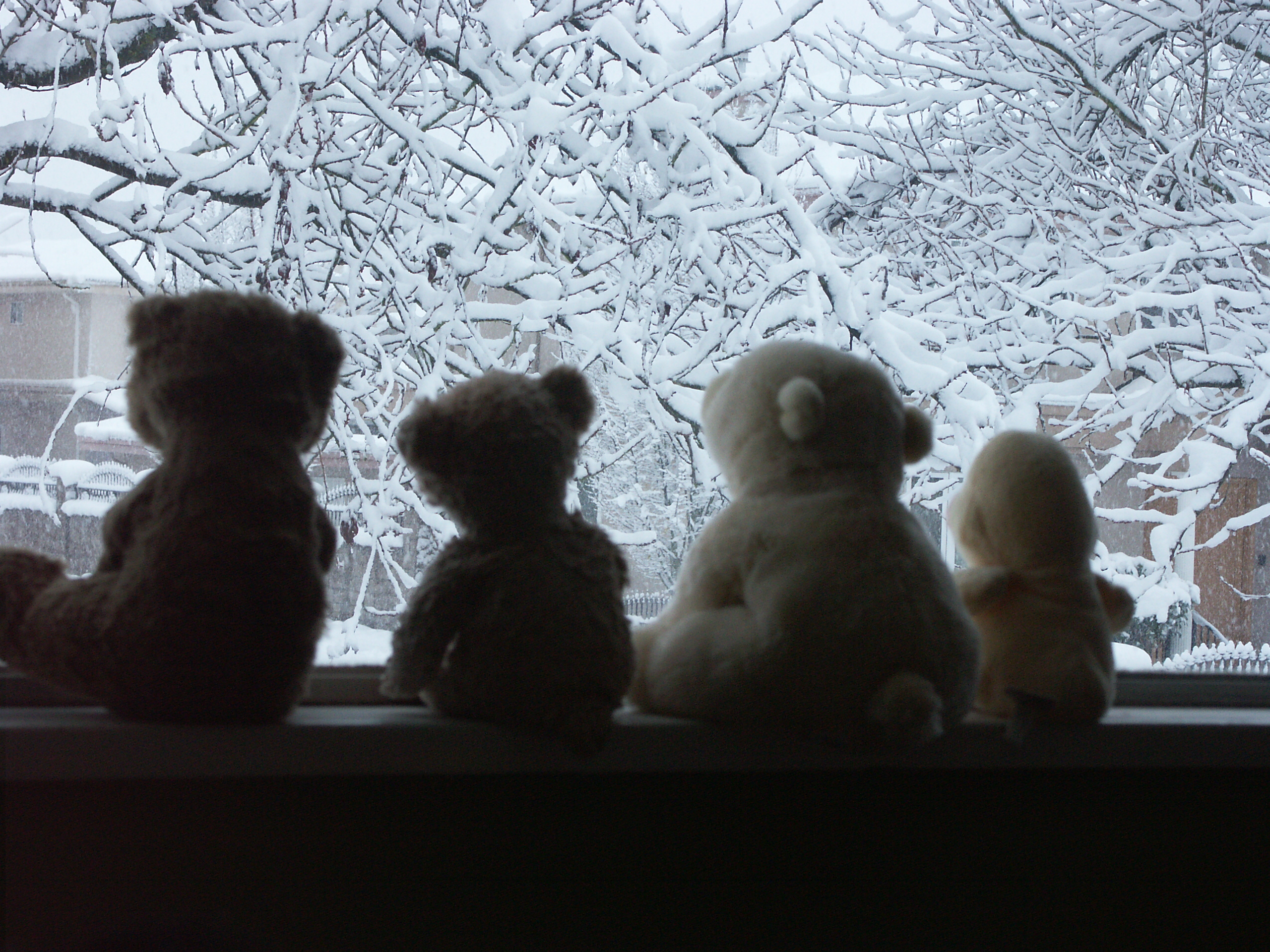 It’s snowing here, which happens only once a year or so, and I can hear spinning tires in the distance. Nobody knows how to drive when snow hits Vancouver, or by extension Langley—even when sober, which you should all be if you’re behind the wheel.
I wish we didn’t have to drive at all! Commuting is totally stressing my dad out, and not in a good way—i.e., he’s fed up with traffic, boredom and gas expenses, but not stressed enough to bring home a case of beer every night. My dad seems destined to give himself an ulcer when he should be getting his buzz on instead, and I feel bad thinking of him dodging incompetent drivers on the road…so I thought I’d give him some reasons to give up driving:
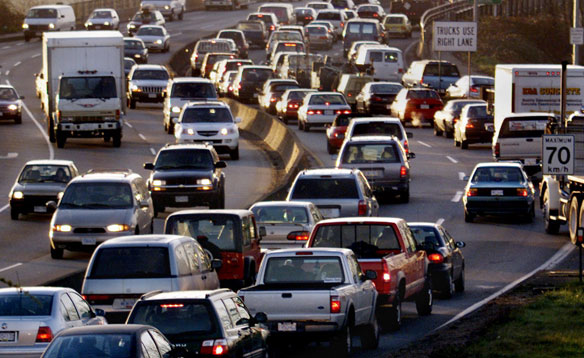
cbc.ca
Right? Let’s get out some wine, stow the car keys and pat ourselves on the back for not being behind the wheel.
What, my die-hard driving friends (who I know always get themselves safely home before shaking a martini)—you want reasons?
What’s that smell?
The biggest problem with driving is the contribution it makes to air pollution. Ground-level car exhaust is poisonous. Asthma is on the rise, as is the number of “indoor days” recommended when pollution hangs in the air and threatens those with respiratory vulnerabilities. Despite efforts to limit emissions, the number of cars has increased, as has the average vehicle size. Urban sprawl continues, making cars necessities where they once were optional.
What do we do? It’s pretty hypocritical for a housebound bear to tell you that you shouldn’t be driving. But I’m worried! Worried for my dad driving, and worried for my mum walking around with two kids who are just the right height to huff the most car exhaust possible. By the time they get to wine-tasting age their olfactory receptor cells will have burned off with their lung alveoli.

Traffic is out of hand.
It takes my dad 90 minutes to get to Vancouver from Langley (a suburb of Vancouver) during rush hour IF there aren’t any accidents holding up traffic. That’s three hours a day, 60 hours a month, 720 hours a year. By the time my dad hits retirement age he’ll have spent four YEARS navigating through gridlock. That time could have been spent on a bar stool.
Gas costs a fortune.
Without taking into consideration car insurance, maintenance and initial outlay, it’s crazily expensive to run a car. That commute of my dad’s?—$500 a month in gas alone. Need I say it? Five bottles of kick-ass single malt.
We are getting really soft.
 Even if you don’t have a beanbag ass, it’s probably soft from driving. Here in the ‘burbs we drive everywhere, often crossing town several times a day chauffeuring kids. Too tired to play with their kids themselves, parents instead oversubscribe their kids to numerous activities, then rush around like maniacs, when they could sign the kids up for one thing and walk to it. Let’s face it, we sign them up for activities to tire them out, because we don’t want them up with us at 11:00pm. If we made them walk they’d get plenty tired.
Traffic could make us snap.
 So we’re physically soft, but there are psychic costs to traffic as well. It’s depressing; it sucks our energy away, and it makes us feel powerless. The power of a car ironically robs us of our own locomotive power, ultimately making our cardiovascular/respiratory systems all the more vulnerable to the pollution the car generates. Moreover, traffic makes people feel freaking desperate. Un-kinking your muscles after you emerge from a cramped traffic odyssey requires a live-in masseuse and more vodka than my parents would ever contemplate buying.
Our climate is f#cked.
Yes, you can find plenty of freaks out there wagging their jaws about the jury being out on climate change. Fact is, there’s pretty much full scientific consensus. If you’re not a complete whackjob and/or fundamentalist conservative you probably have the brain cells to appreciate that climate change is a reality, and that we’ve already committed our grandchildren’s grandchildren to cleaning up our shit. Sadly, we don’t seem to be willing to give them a head start by investing in some solutions.
Okay, so I hate myself for lecturing, and I really apologize because the stern tone is rooted in sobriety—my personal seventh layer of hell and the impetus to rain on everybody’s four-wheeling parade. I know it’s hard to get away from driving. As a society we’re chained to our cars. But here’s the thing: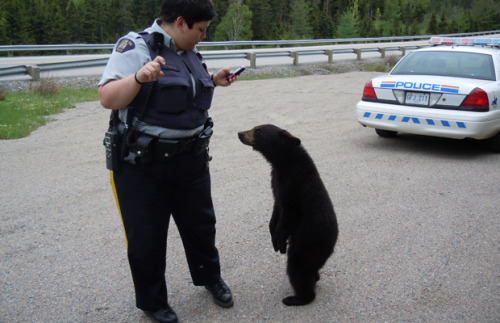
If you drive, you can’t drink. So driving really messes with your alcoholism, doesn’t it? It’s a good reason to eliminate it (driving). And it’s so much more fun to reel around on the bus with strangers than it is to get arrested in your car.
So what needs to happen to demote the car in society’s esteem?
What do you think?
 My Fellow Inebriates,
I found an old blog I started months ago and forgot about because I was drunk at the time.
It was a Blogger blog. I’d filled out my profile information and some preferences, uploaded a background and selected some fonts, then abandoned the thing, presumably because we’d bought some gin or something.
If I hadn’t accidentally visited Dan Lacey’s Blogger blog, I’d never have remembered.
It worried me how completely the memory of starting a Blogger blog had vanished. Easy to forget, too—its stats showed one visitor in the past three months, two in its entire lifetime.
 Now, you’re probably thinking this is a sign of advanced alcoholism, and you may be right. But OMG, what if it’s another kind of dementia? How would I know the difference?
Turns out it’s pretty hard to tell the difference. Common symptoms of both:
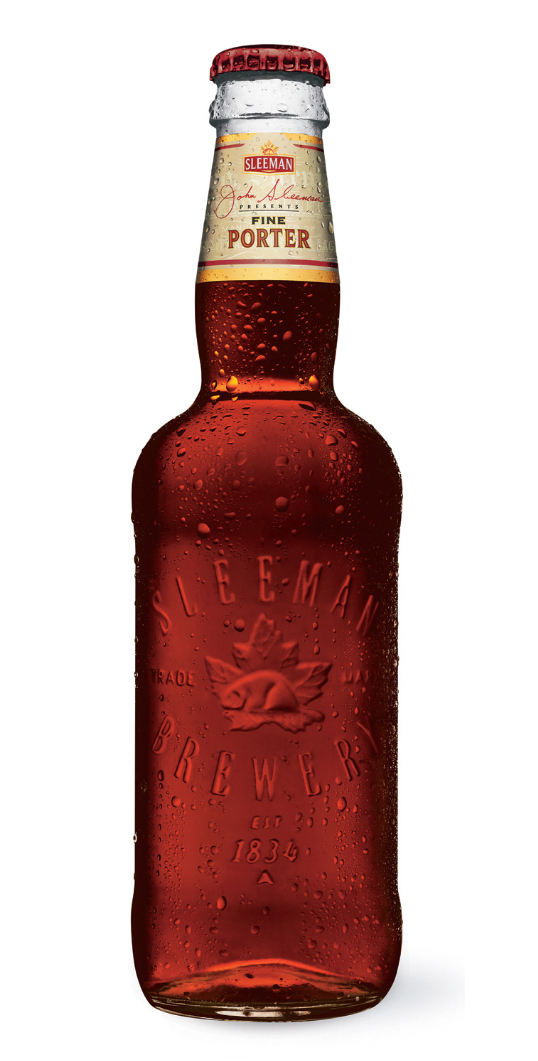 I totally have memory problems. For instance, I almost forgot to mention the SLEEMAN FINE PORTER I tried over the holidays. SLEEMAN is a bit of a go-to at our house; during summer we buy the HONEY LAGER quite often because it has more body than a typical lager while still being crisp and refreshing. Safe to say: SLEEMAN would have some know-how about producing a porter.
 Pouring it into a glass was difficult despite the familiarity of the task. These little paws of mine are no match for even twist-off convenience, lacking as they do any muscular or skeletal construction. Intelligent design, my furry ass! I should have been constructed with an opener built into my paw, but then I’d be such a robotic mutant that I’d freak myself out. Luckily my dad finally opened a bottle.
In the glass SLEEMAN FINE PORTER is a beautiful dark mahogany with a pillowy-soft layer of inviting foam. The smell is faintly nutty with detectable chocolate and caramel—not aggressively aromatic and in my judgment—the same judgment that prompted me to release my own porn video—just right.
Moderate carbonation makes this porter unlike the British cousins it’s partially aspiring to imitate; the crispness is a savvy move on the part of SLEEMAN and their best bet in terms of capturing mainstream market popularity. This brew will probably turn off ardent purists, but they probably don’t drive the SLEEMAN market anyway. I like the way the fizz balances against the bread-and-chocolate background flavors, mitigating the expected heavy creaminess, highlighting the hops, and settling down into a satisfying, long finish with just the right hint of bitterness.
After consuming an abundance of SLEEMAN FINE PORTER I certainly struggled with language problems, so I’ll borrow my dad’s pronouncement: “probably the best beer SLEEMAN makes.” But then his personality changed (OMG!) and he denied me another bottle. And then my personality changed, and I called him a dick.
It all feels a bit demented—but in an elderly way, a neurologically-impaired sort of way, or an alcoholic way?
There’s plenty of overlap between diagnoses, but luckily medical experts are on the job. In fact, recent studies show that brain impairment differs among alcoholics from that exhibited by Alzheimer’s patients.
One recent study compared 39 elderly detoxified alcoholics with 9 Alzheimer’s patients and 15 control subjects. I’d have liked to have been a fly on that wall, or even played bartender, but apparently it was all business. The subjects with alcohol-related dementia showed different types of impairment from the other groups, the former group specifically challenged by fine motor control, initial letter fluency and free recall. As you can imagine, these skill deficits make it awfully hard to write a coherent booze review, so my apologies.
Curious whether you’re an alcoholic? If you suspect you are, there are plenty of tests to help you confirm it. Go on, find out! In fact, here’s the Johns Hopkins University Test for Alcoholism. Add up your answers! And send me your comments 😉
Please answer yes or no to each question.
Results
YES answers:
3—indicates a probable drinking problem.
4-7—indicates early-stage alcoholism.
7-10—indicates middle-stage alcoholism.
10+—indicates end-stage alcoholism.
——————————————————
How did you score? I got a 5! That means there’s plenty of fun left 😉
 Liquorstore Bear