
My Fellow Inebriates,
The Tooth Fairy managed belatedly to grab P’s tooth from beneath her pillow this morning without her seeing it. P had seen only the coins and the red-tinged water glass and thankfully not thought to double-check the fairy’s thoroughness in securing her dental booty. It was a good save, and P’s belief in fairies survives yet another day.
 At breakfast she said, “My classmate W doesn’t believe in the tooth fairy. In his country it’s the tooth mouse.” This did not cause P any apparent conflict; she says there’s not just one tooth fairy but many, some of whom are boys, some of whom are girls, and some of whom are—oh yeah—mice.
It’s a perfect illustration of how Mum and Dad are missing their window to indoctrinate P with some religious mythology. She is a perfect canvas of credulity—perhaps more so than her little sister V, who evinced some skepticism when she asked what happens when you accidentally swallow a tooth.
Mum: “It just comes out in your poo.”
V: “Are you sure?”
Mum: “Yeah, teeth are so small, they just go right through you.”
V: “It doesn’t get stuck?”
M: “Well, no. You might have to drink a glass of water, but—you probably wouldn’t ever swallow a tooth anyway.”
V: “How do we get it out of my poo?”
M: “Well, don’t plan on swallowing a tooth.”
V: “Does the Tooth Fairy go into the toilet and get it?”
Mum has no answer.
V: “Or does the Toilet Fairy get it?”
However accepting P is of the Tooth Fairy and any other numinous characters she might be told about, V can be counted upon to hit you with a bunch of lawyerly questions. Her cross-examination continued until she erupted in chortles at the idea of a Poo Fairy pawing through her shit to find a precious tooth. V is a five-year-old cynic, and she will be the one who debunks Santa for seven-year-old P, unless she astutely reasons which way her bread is buttered and goes along with the fantasy until she’s a teenager. The kid is a nut, and she will tire all of us out before our time.
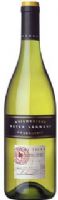 When you’ve finally managed to get a child like V to submit to bedtime, you have no choice but to pour yourself a drink. Our poison? PETER LEHMANN WEIGHBRIDGE UNWOODED CHARDONNAY (2011). Not the super-stiff drink we probably needed, but much more bracing than any of the whites we’ve been drinking lately, this Chardonnay boasts young fruit and honeydew/peach aromas uncomplicated by the usual oaky finish. Our tastes have run to off-dry whites that tease the palate—not crisp zingers, so the first glass was a bit of a shock to the system. On to the second, then.
You really should never review a wine without drinking the whole bottle, or even two. That way you get to experience the wine going down and coming up. Unfortunately I don’t make such portioning decisions at LBHQ, so we settled for two glasses. Write off the first as a shock to the system. How does this Peter Lehmann number really add up?
Disclaimer: I wanted to dislike it after reading Lehmann’s bio: “never shirking the opportunity to challenge a norm” (much like palpating a five-year-old’s turd to find a swallowed tooth, I would imagine). But this unwooded Chardonnay is competent stuff—not as buttery or mouth-filling as I would have liked, but serviceable after a hard weekend with nutbag elementary-age kids. It’s more than inoffensive; it’s quite tasty if not overly interesting or sophisticated. Chardonnay grapes are tricky because they lend themselves to so many winemaking styles; you often have no idea what you’re in for when you pull a cork (or unscrew a cap). Without oak influence, Chardonnay’s fruity notes stand crisply on their own, unmitigated by vanilla or buttercream chords, and a certain roundness is lost. What’s gained, sometimes, is definition, and perhaps more bang for your buck. After all, oak casks cost money, and when they’re not involved in production, that $13 WEIGHBRIDGE price tag arguably goes a bit further.
After I got used to it, I liked Peter Lehmann’s unwooded Chardonnay. It’s well behaved, reasonably complex, and has a decent finish. As for the 11.5% alcohol…it’ll do. We need to be sober in the morning to cope with young interrogators.
 In fairness to Peter Lehmann, his BAROSSA BRUNETTE was upstaged by an Argentine Malbec we enjoyed immediately before it (review to follow). Although we have friends who would debate this, the LBHQ policy is to have the lesser wine first, moving from good to better (we can’t afford “best”). It’s very pleasant to savor one wine only to have it topped by another. This way you get to enjoy both wines—the first in ignorance of the second. If you have the better wine first, whatever follows is going to seem like relative crap.
 Liquorstore Bear